A weekly newsletter, built like a newsroom of agents
The M.Akita Chronicles lands every Monday morning: the links I found worth reading that week, with my comments, sarcastic remarks from M.Arvin, a very depressed robot, and a podcast of the two of us. It is written in Portuguese.
- 16,054
- subscribers
- 33
- weekly issues so far
Counted on September 23, 2026.
From links to your inbox
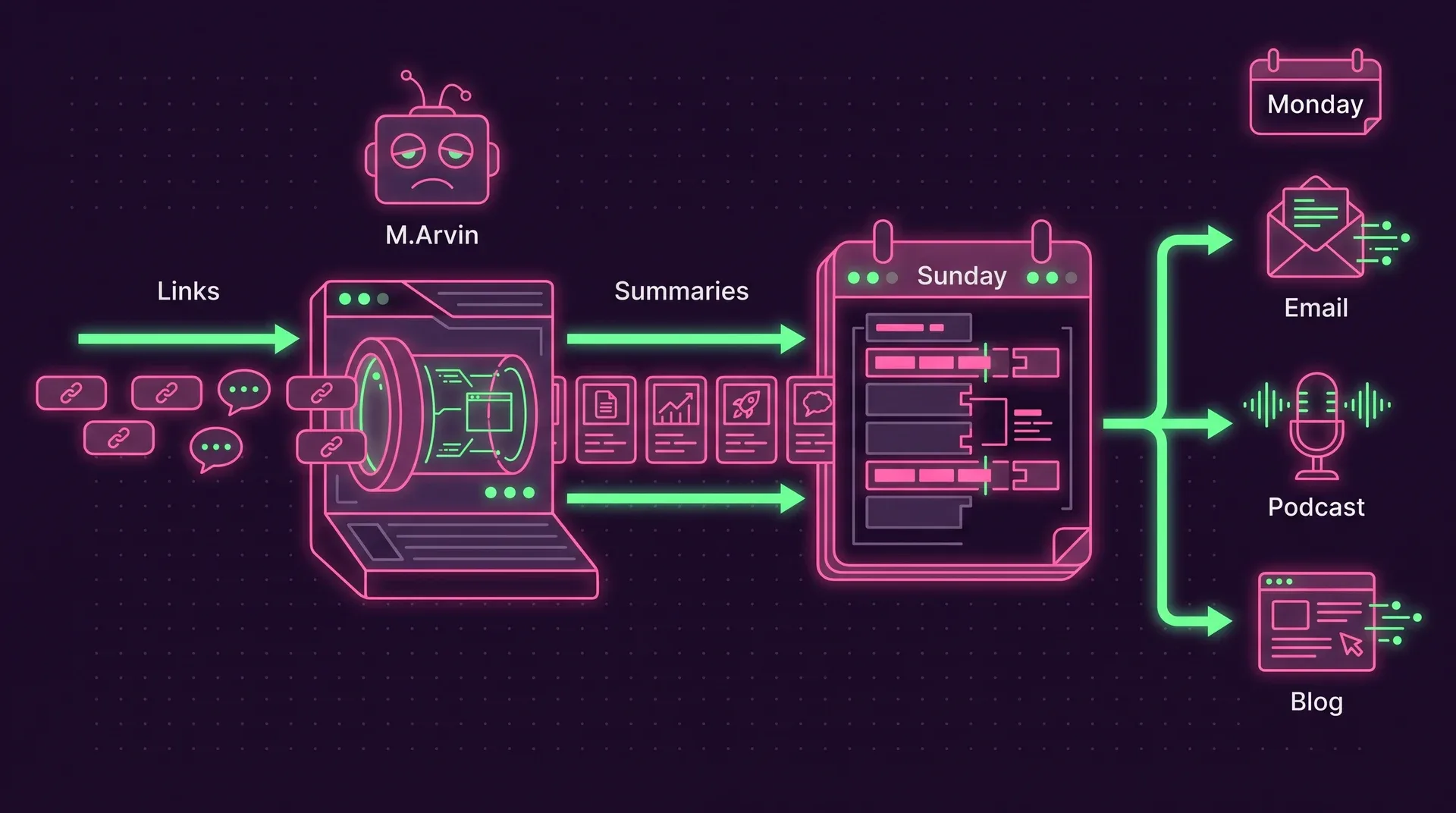
I post links and comments during the week. The pipeline does the rest, and nothing ships without passing an approval check.
During the week
I drop links and comments in a Discord channel, and my posts on X are collected every 30 minutes. Each article is fetched, summarized and illustrated. Suspicious stories get a credibility check.
Sunday afternoon
The recurring sections are written: the most discussed dev stories, finance, YouTube picks, markets, world events, history and geek history, holidays, a book, and the closing remarks.
Sunday night
The issue is assembled and linted. If the check is clean, it is approved and the podcast script is written and voiced, in my cloned voice and M.Arvin's.
Monday, 7 a.m. in São Paulo
The issue goes out by email, the blog publishes it with the podcast, and the week starts again.
How it is built
The code is private, but the shape is simple: two Rails apps that talk through plain files, and a static blog.
marvin-bot
A Rails app with the Discord bot, article ingestion, AI summaries and images, the weekly sections and the podcast.
newsletter
A second Rails app that assembles the issue, runs the approval gate, manages subscribers and sends the email.
blog
Hugo, deployed to Netlify, with every issue and a transcript of every podcast episode.
content/
Markdown files with YAML headers. The apps read and write the same folder, so most integration is just files.
Now also blog posts, read aloud
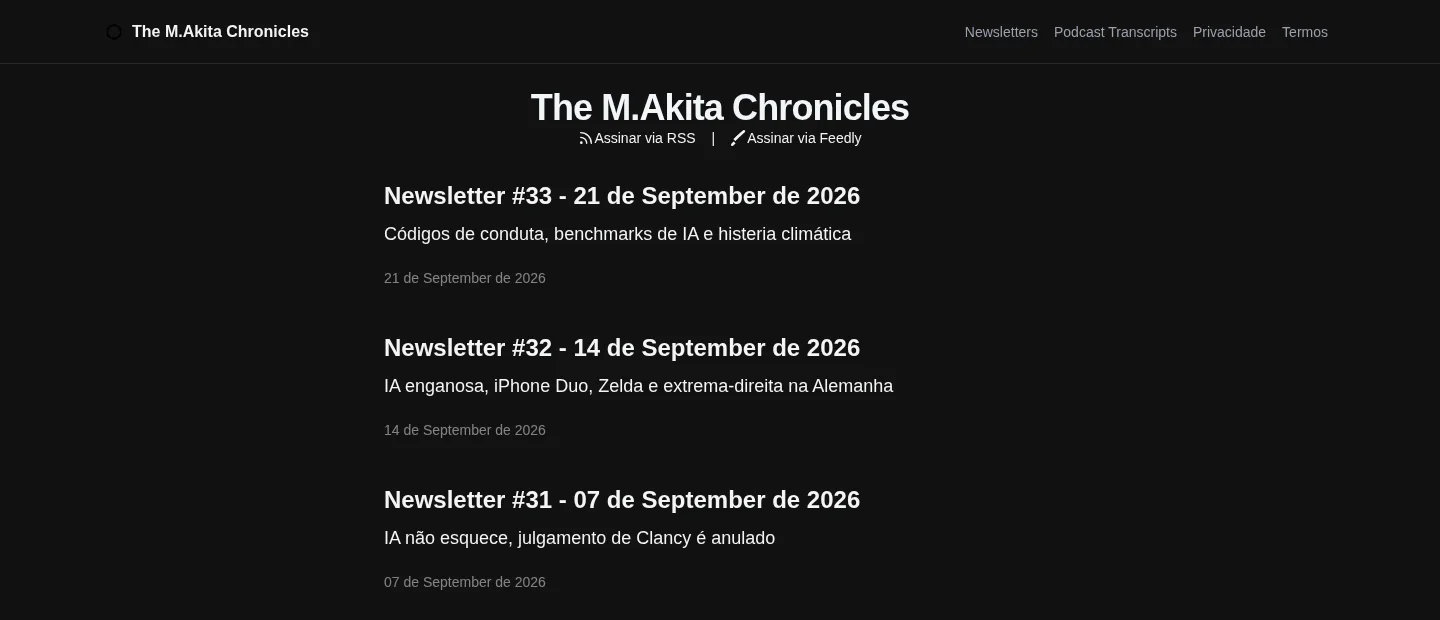
Besides the weekly episode with M.Arvin, I started turning some of my favorite blog posts into proper podcast episodes. Same show, same feed.
Everything here is open source
The tools, the skills and the benchmark are public repositories. Fork them and build the version that fits the way you work.