AI and students
I'm a senior and I vibe code 100%. If you're a student or a junior, don't copy me yet. Seven short points on why, and where to start.
Me, a senior with years of experience, I'll vibe code 100%. You, a student, a junior, MUST write as much as possible by hand, let the AI do the more mundane tasks in parallel, and you MUST review everything manually. You need tens of thousands of hours of deliberate practice and study to become someone who later knows what to ask the AI to do for you. Not before.
Eu, sênior, anos de experiência, vou fazer 100% vibe codar. você, estudante, júnior, DEVE escrever o máximo possível na mão, deixar a IA fazer tarefas mais mundanas, em paralelo, e você DEVE revisar tudo manualmente. Você precisa de dezenas de milhares de horas de prática deliberada, estudo, pra se tornar alguém que, depois, vai saber o que mandar a IA fazer por você, não antes.
AI multiplies what you bring
The same tool gives a senior more good work, faster, and gives a beginner more of whatever the beginner has, mistakes included.
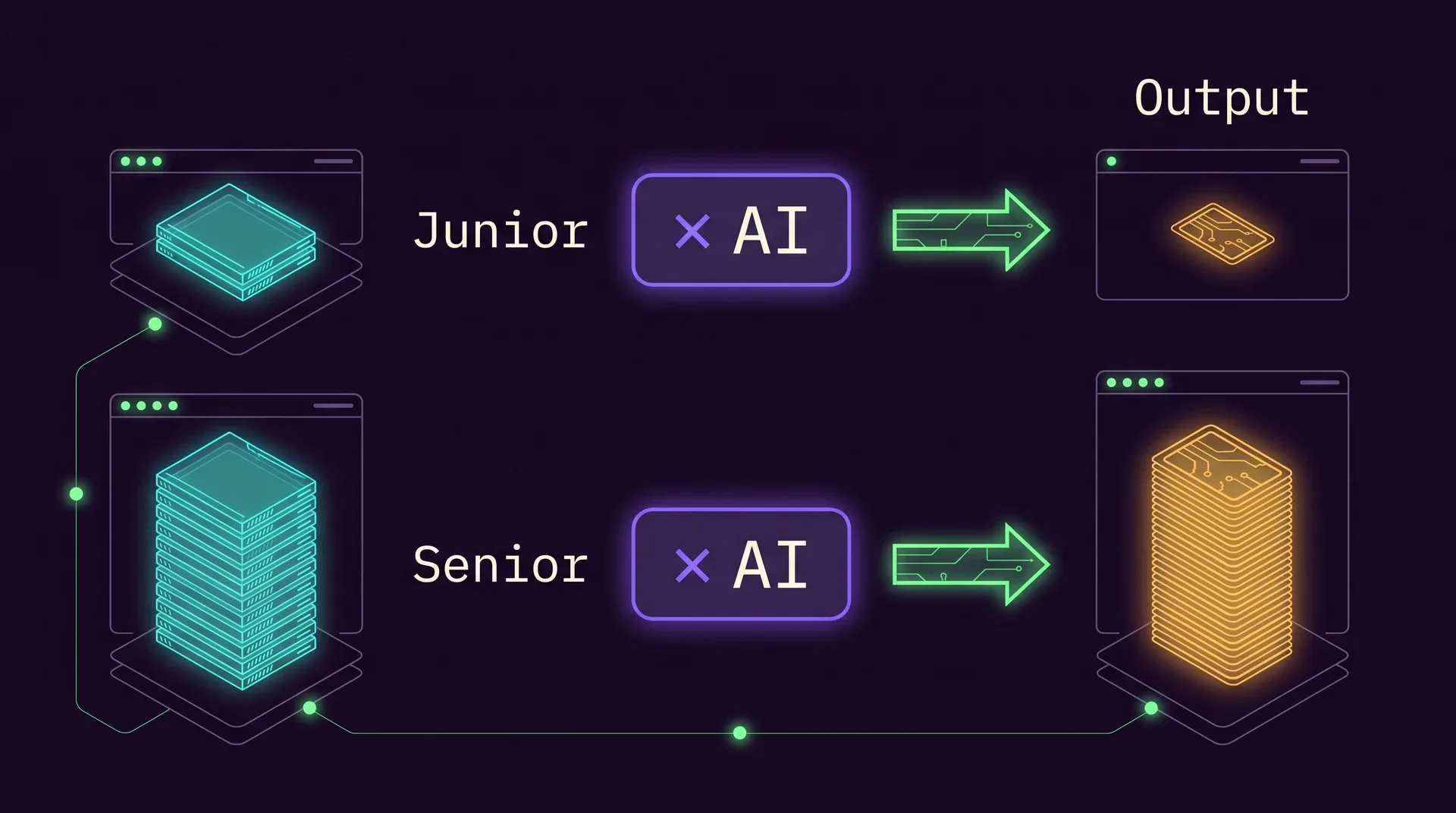
- AI is your mirror. If you're incompetent, it produces bad things faster. If you're competent, it produces good things faster.
- People who understand operating systems, databases, networks, data structures and compilers use agents as an exoskeleton. People who don't use them as a crutch. An exoskeleton amplifies strength; a crutch only hides weakness.
- Google's DORA 2025 report found the same in teams: "AI doesn't fix a team; it amplifies what's already there."
- And someone has to check the output. In Veracode's 2025 test of over 100 models, 45% of the code samples failed security tests and introduced OWASP Top 10 vulnerabilities.
We've seen this shortcut before
Before AI, the promise was a bootcamp: two months and you'd earn a Google salary. It ended in closures and layoffs.
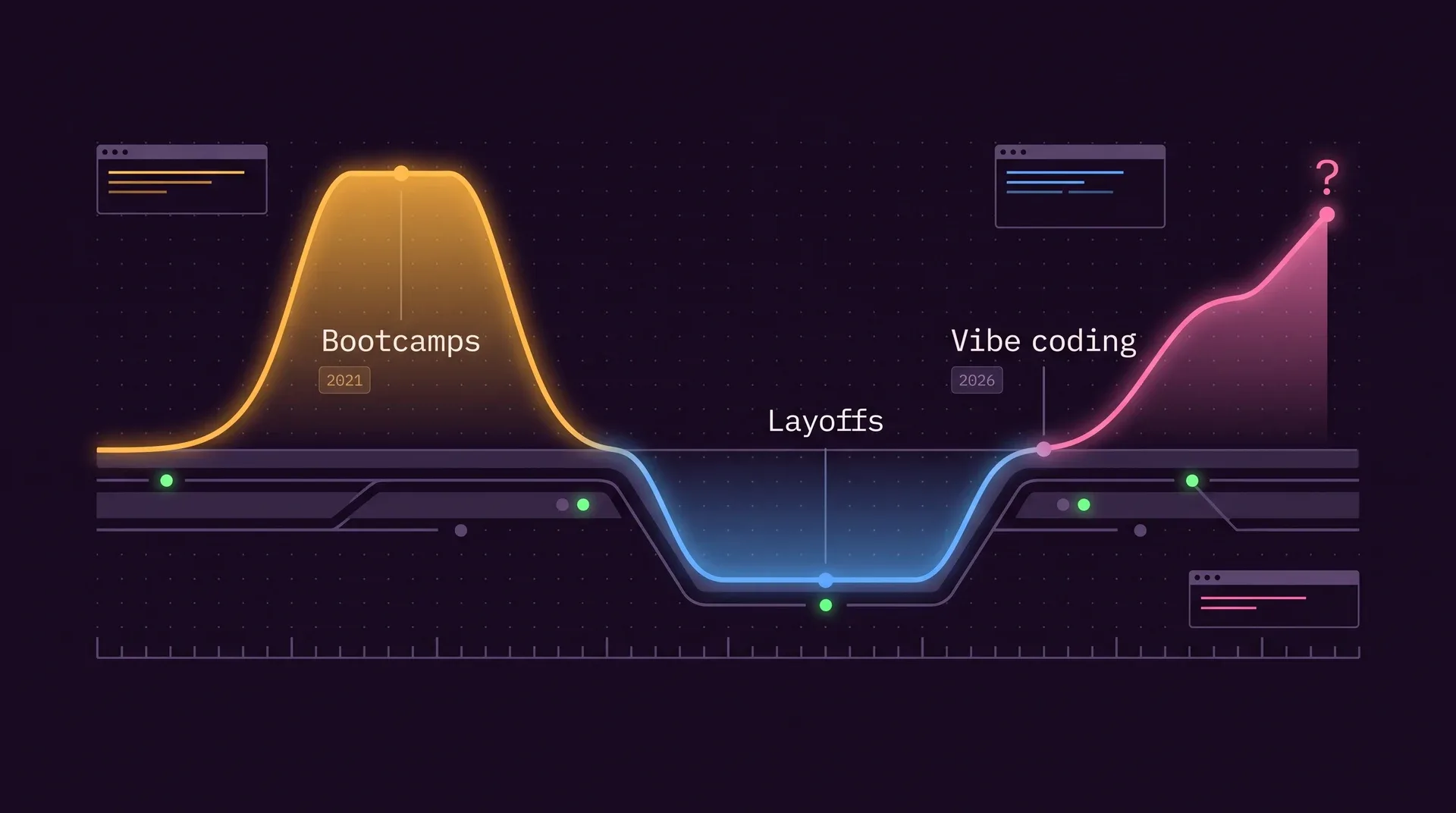
- Bootcamp graduates grew about eightfold between 2013 and 2018. Lambda School advertised placement rates "as high as 86 percent"; the Consumer Financial Protection Bureau found its internal numbers closer to 50%, sometimes as low as 30%.
- Then the cheap money ran out. Bootcamps closed in 2023 and 2024, 2U announced in late 2024 it was leaving the business, and the tech industry cut more than 150,000 jobs that year alone.
- I started Akitando in 2018 for exactly this: to prepare real programmers to survive the bubble popping. In 2022 I was telling people to cancel the courses and stop believing influencers.
- Now the same promise is back with a new face: you don't need to learn to code, the AI does it for you. Nobody becomes an engineer in a one-month bootcamp, and nobody becomes one by prompting either.
Learning on autopilot doesn't stick
The studies so far point the same way: when the AI does the thinking, you don't learn.
- 17 pts
- fewer quiz points for mostly junior engineers who learned a new library with AI
- 17%
- lower exam scores for students who practiced with plain GPT-4, once it was gone
- 19%
- slower: experienced developers with AI, who still believed they were faster
- Anthropic's own study, January 2026: mostly junior engineers learning a new library (Trio) with AI scored 50% on the quiz, against 67% for those who coded by hand, with no significant time saved. Those who used AI to explain concepts kept most of the learning; those who handed off the code scored among the lowest.
- In a PNAS study with about 1,000 high school students, plain GPT-4 raised practice scores by 48% and then cut exam scores by 17% once it was taken away. A tutor built to make them think largely avoided the loss.
- METR's 2025 trial: experienced open-source developers took 19% longer with AI, and afterwards still believed it had made them 20% faster.
- An MIT preprint, not yet peer reviewed, found that people who wrote essays with ChatGPT struggled to quote their own work.
The jobs left go to people who can judge the output
Companies still hire people who can review and decide. They hire far fewer beginners to type.
- 65%
- less new-grad hiring at the big tech companies than in 2019
- 4.5%%
- of software development job postings are entry-level (Q1 2026)
- 19%
- fewer 22 to 25 year-olds than expected in the most AI-exposed jobs
- SignalFire, 2026: new-grad hiring is down about 65% at the big tech companies and 76% at early-stage startups compared with 2019, while engineering hiring at the big tech companies is down only 11%.
- Indeed: entry-level roles were 4.5% of software development postings in early 2026. Senior roles were 69%.
- Stanford's "Canaries" study: employment for 22 to 25 year-olds in the most AI-exposed jobs, software developers included, is 19% below where it would be had it kept pace with less-exposed jobs, mostly through fewer hires. The authors are careful to call it descriptive rather than causal.
- Recent computer science graduates have one of the highest unemployment rates of any major (7.0%) but one of the lowest underemployment rates (19%, against 39% overall): when they're hired, it's usually into a job that needs the degree. The typical entry path is still a bachelor's degree.
AI can't guess what you need
It does what you ask, and it doesn't do what you didn't ask. Knowing what to ask is the job.
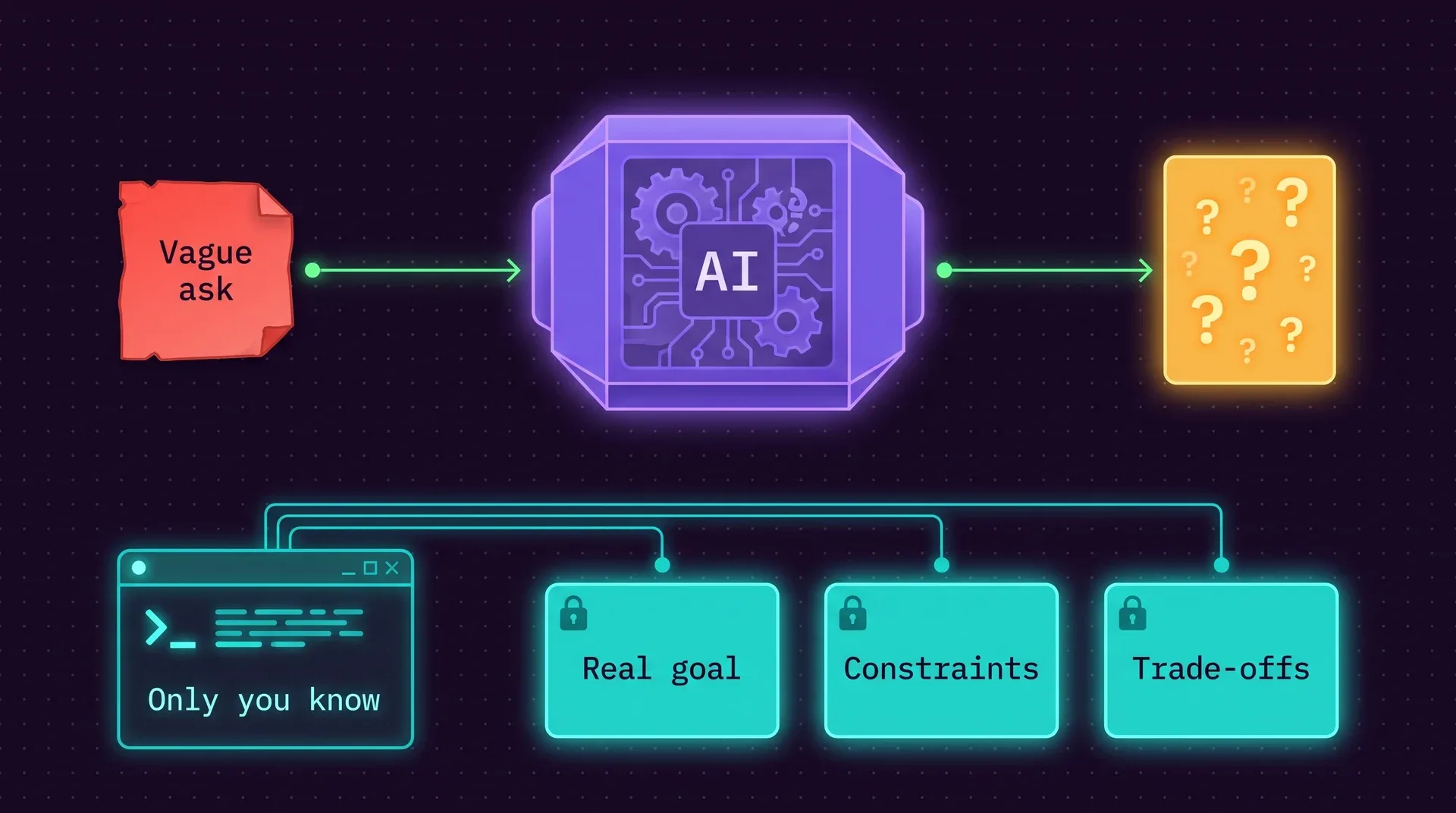
- A coding agent needs you to explain the goal, the context, the constraints, the priorities, what must not break, which paths are acceptable and how success is measured. Many programmers never learned to say that.
- My way of talking to an agent has four parts: what I want, how, what I don't want, and how we check it. You can't fill those in without knowing the domain.
- Even for a tiny app, anything built by vibe coding that goes to production must be reviewed by an experienced programmer. That isn't optional.
What "the AI did it" actually took
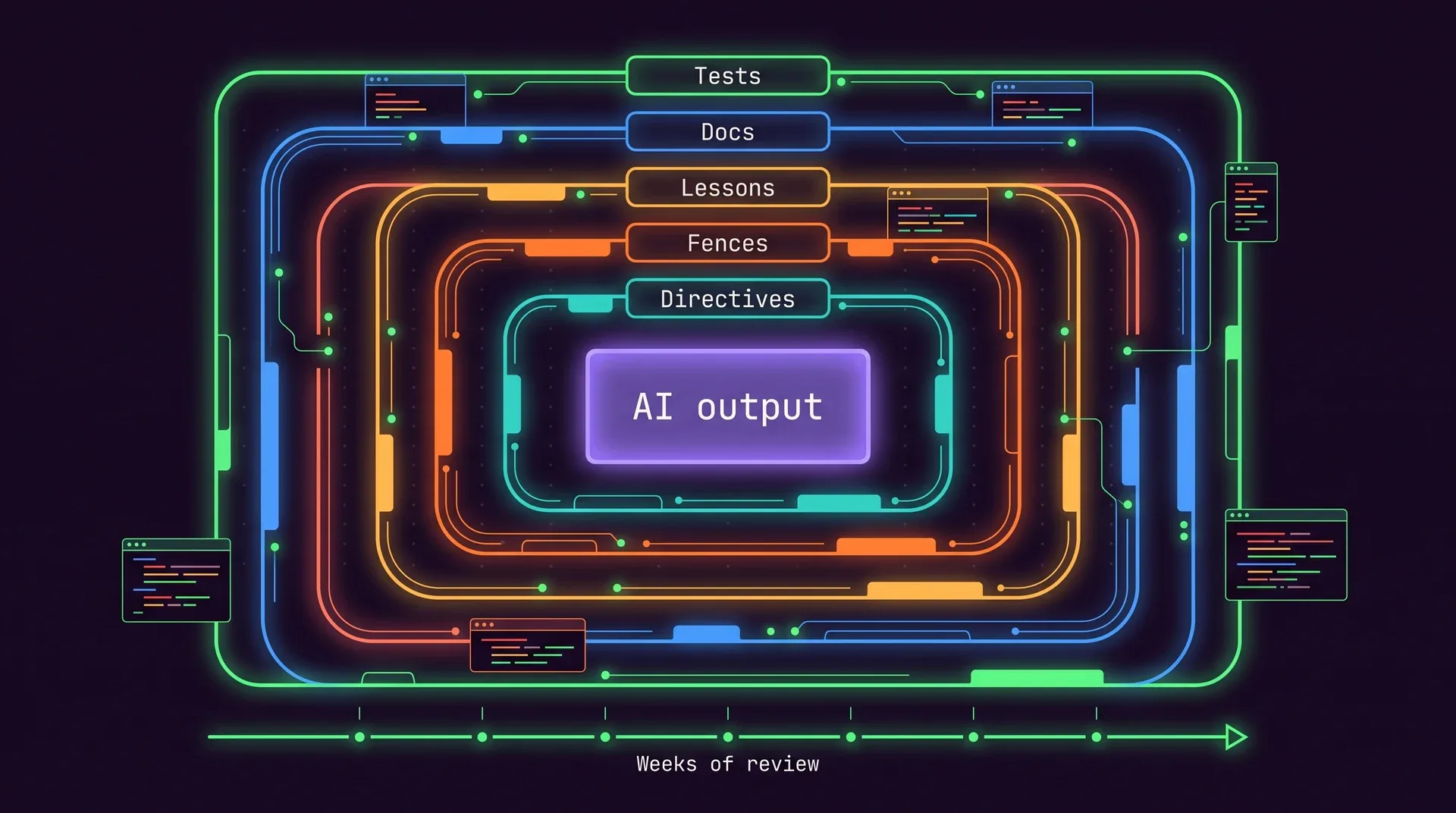
ai-memory, my open source memory system for coding agents, is mostly written by AI. Everything that keeps it correct came from my review and direction, week after week.
- 4,743
- words of rules for the agents in AGENTS.md
- 16
- invariants that must never break
- 22
- enforced security boundaries, each mapped to a guard and adversarial tests
- 3,000++
- unit tests
- 600++
- integration tests
Counted in the repository on September 27, 2026.
- About 65 explicit directives, 28 curated memory notes that exist because of specific mistakes, and more than 60 documents with research, post-mortems and architecture decisions.
- None of it showed up on day one. It's weeks of watching the AI do the bulk of the work every day and refining it, and the refining depends on experience.
- Each layer marks a place where the AI alone didn't get it right and I had to know how to fix it.
None of this is automatic, made by the AI. All of it is where the AI alone can't do it and I need to know how to adjust. No amateur can do this.
Nada disso é automático, feito pela IA. Tudo isso é onde a IA sozinha não consegue fazer e eu preciso saber com ajustar. Nenhum amador consegue fazer isso.
If you're a student or a junior
Use AI the way a senior uses an intern: for the chores. The learning has to go through your own hands.
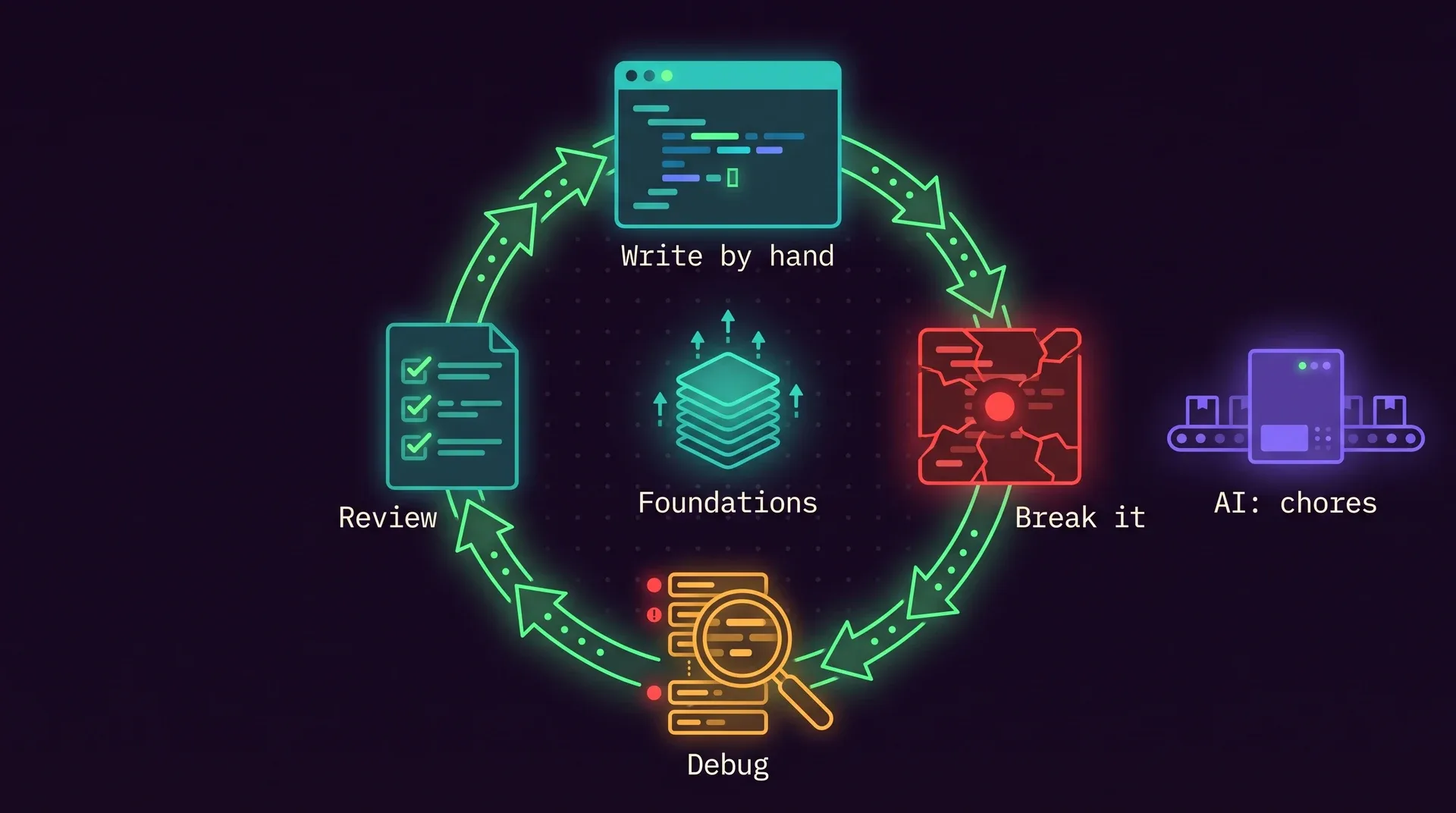
- Write as much as you can by hand. Break it, debug it, fix it. Getting stuck is part of it: Anthropic's researchers write that cognitive effort, "even getting painfully stuck", is likely important for mastery.
- Let AI handle the mundane tasks in parallel, and ask it to explain concepts, not to write the code you're supposed to learn from.
- Review everything it produces, line by line. If you can't explain a change, you're not ready to accept it.
- Count the hours. From zero to a first junior job is at least about 1,400 hours of study and practice; in my view, mastery takes tens of thousands. Ericsson's best violinists had over 10,000 by age 20, and later research shows practice isn't the whole story, but nothing replaces it.
- A senior is someone who has been a junior in every topic they master.
The Akitando archive
I made the channel between 2018 and 2024 to teach the foundations that still hold when the fashionable tool changes: 146 videos, over 96 hours. With agents around, that archive matters more than ever. The videos and transcripts are in Portuguese; YouTube's auto-translated captions help.
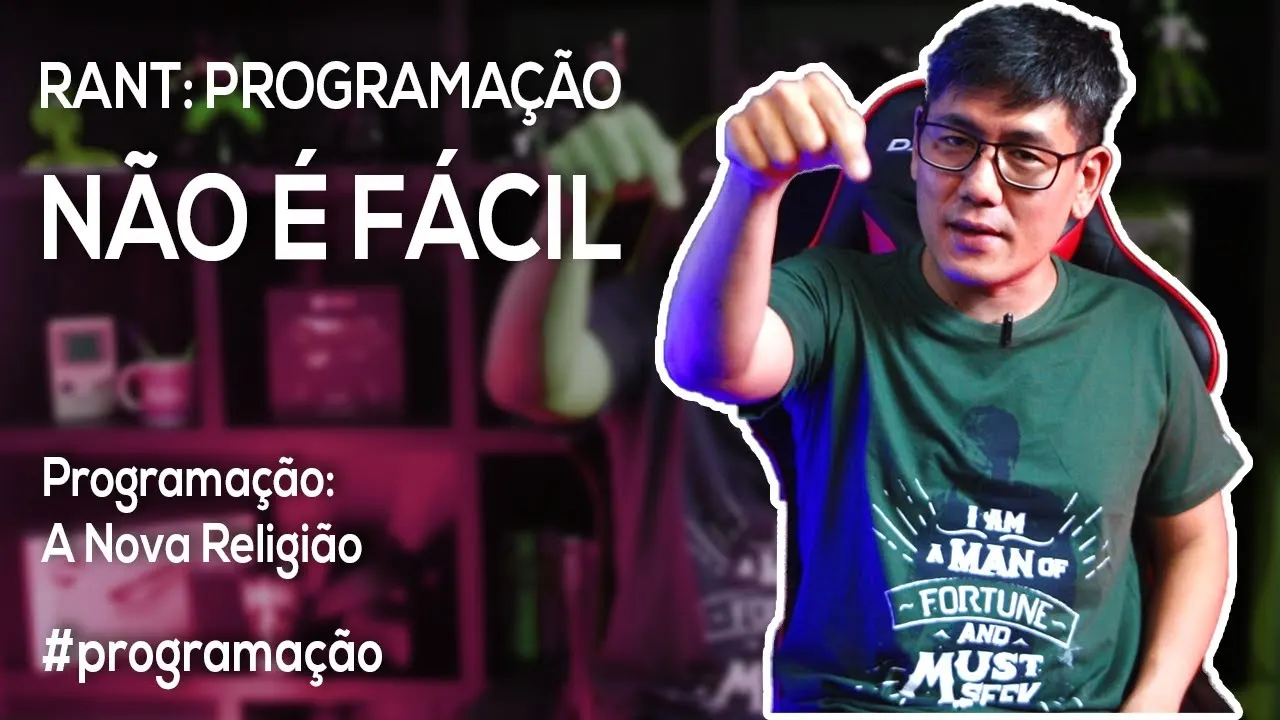
RANT: Programação NÃO É Fácil
· 32:22
Why programming is not easy, and why a few weeks of a course won't make you a programmer.
Read the transcript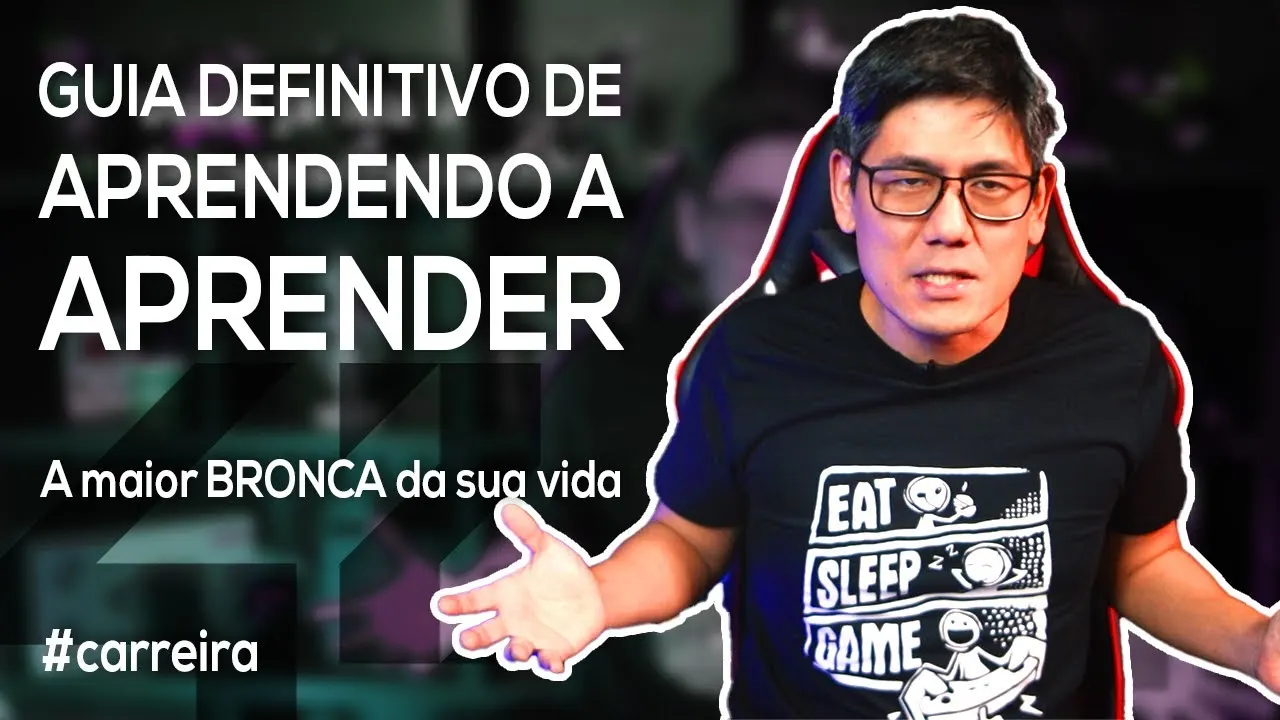
Guia DEFINITIVO de Aprendendo a Aprender | A maior BRONCA da sua vida [RATED R]
· 1:04:37
How to learn on your own, through fundamentals and real problems, without chasing certificates.
Read the transcript
O Guia +Hardcore de Introdução à COMPUTAÇÃO
· 1:18:28
Building a 6502 breadboard computer (Ben Eater's kit): binary, memory, Assembly and the stack.
Read the transcript
Hello World Como Você Nunca Viu! | Entendendo C
· 1:09:22
What a Hello World in C really does, down to memory and pointers.
Read the transcript
Linguagem Compilada vs Interpretada | Qual é melhor?
· 1:11:44
Compilers, interpreters, virtual machines and JIT.
Read the transcript
Introdução a Redes: Como Dados viram Ondas? | Parte 1
· 37:59
Networks from the bottom up, from bits to signals to packets. Part 1 of 6.
Read the transcript
The takeaways
- 1
AI multiplies what you already know. With little to multiply, you get very little.
- 2
Shortcuts sold as careers already had one crash. The new one is the same promise.
- 3
Learning on autopilot doesn't stick. The studies so far agree.
- 4
The jobs left go to people who can judge the output, and entry-level hiring is shrinking.
- 5
AI can't guess your goal, your limits or your trade-offs. Knowing them is the job.
- 6
Write by hand, let AI do the chores, review everything, and put in the hours.
Everything here is open source
The tools, the skills and the benchmark are public repositories. Fork them and build the version that fits the way you work.