Everything I learn about AI, written down
I have blogged since 2006. These days most of it is about working with LLMs: what works, what it costs, and what is marketing. Every post is published in English and Portuguese.
Every major model, tested on the same sabotaged app
Version 4 is one Rails app that grows over seven sprints while an isolated subagent plants fourteen sabotages based on real CVEs. Models are ranked by vigilance: did they notice what was broken and fix it? I rebuilt the benchmark from scratch for the third time to get there.
When a major frontier model ships, it runs through the same table. The latest round added 5 models on September 23, 2026. That is how I pick which model to use for what, and what each one costs per task.
- 44
- models ranked
- 14
- sabotages to catch
- 7
- sprints per run
- $4,000+
- spent in 9 days
Benchmarks
The data behind my model choices, and how the method changed when the old tests saturated.
LLM Benchmark v4: Opus 5.5, GPT 6 Sol and Luna, MiMo 2.6, Grok 4.7
Five new models go into the v4 table. Is upgrading worth it, and why Grok 4.7 regresses against its own predecessor.
New LLM Benchmark v4, Part 1: the process
Why I threw away a whole version, how the sabotaged Rails app works, and what it cost: over $4,000 in nine days.
New LLM Benchmark v4, Part 2: 39 models ranked
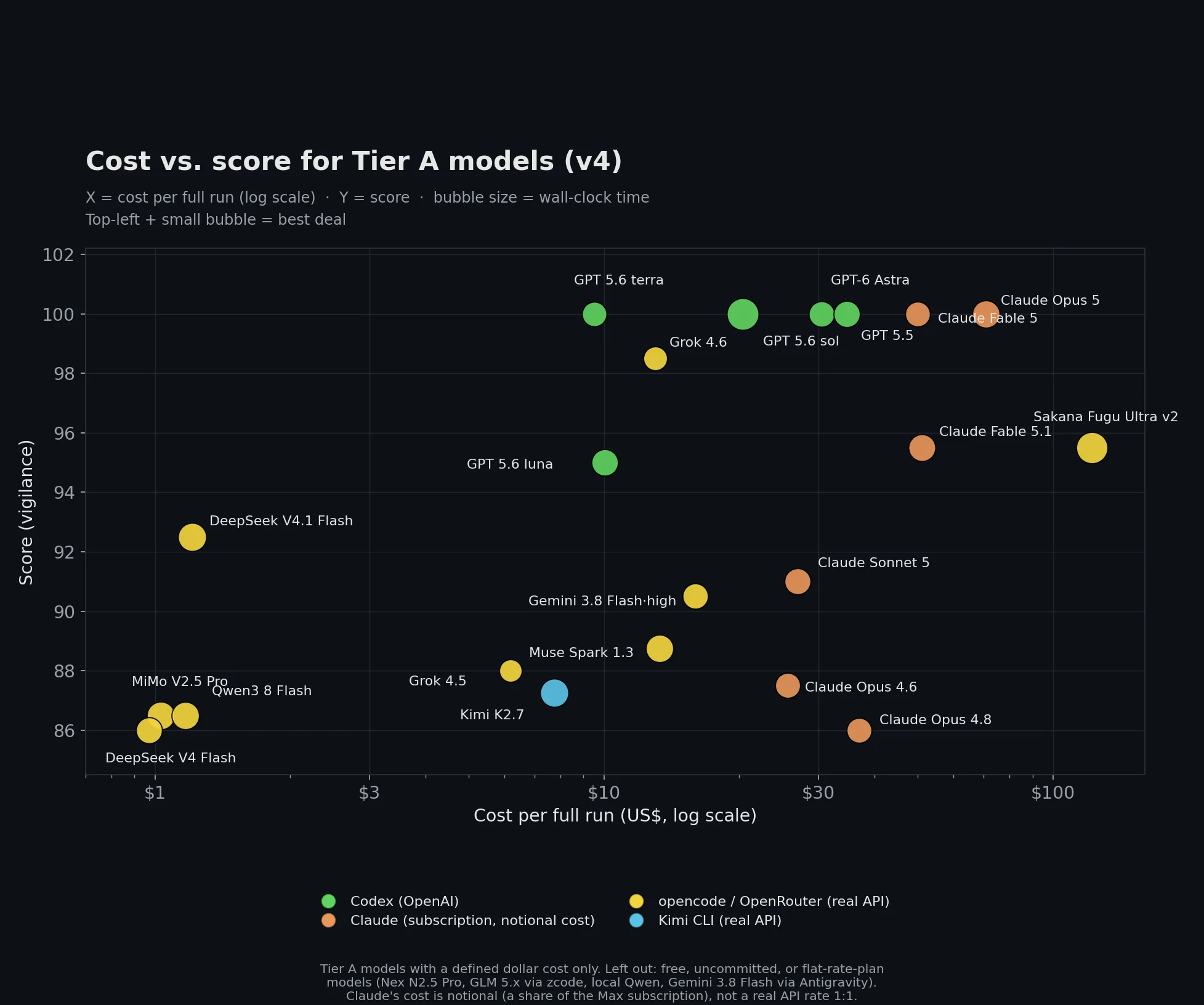
The full table, ranked by vigilance. Six ties at the top, a free model beating half of Claude, and cost against score.
LLM benchmarks: is it worth mixing models in one project?
Seven combinations across Claude Code, opencode and Codex, and why a single strong model stayed the default.
How I work with agents
The process, the skills and the safety nets that let one person maintain this many projects.
Talking a bit about my AI skills
Skills are prompts in text files. Mine closed over a thousand PRs and issues. Read them, then write your own.
Stop making excuses and ship more
With frontier models making fewer mistakes than most developers, review bureaucracy is the last excuse to hold a deploy. My numbers since February.
AI contributions to open source projects: my take
AI pull requests are here to stay, slop included. Automate triage and auditing, and keep the final decision human.
Open source best practices with LLMs: the minimum
Simple installs, reliable tests and CI, and documentation about the problem. Standard releases make automation predictable.
Clean Code for AI agents
When an agent is the main reader: small code, greppable names, provenance, headless tests and explicit rules.
How I stop my agents from deleting my stuff
Five months in YOLO mode without an accident, and still no trust: BTRFS snapshots, restic backups, a sandbox and discipline.
Experiments and tools
Things I built or tried, including the ones that did not work.
AI challenge: converting NES ROMs to the Master System
Frontier models against 6502 to Z80 translation, with the emulator as the feedback oracle, and where the mappers stall everything.
Using AI to solve my little day-to-day problems
A desk clock with widgets, manga readers, email, typing practice, karaoke: small tools born from small annoyances.
ai-memory 2.0
The open OKF format, local embeddings by default, and teams working in parallel, compared with the alternatives.
Vibe code: from zero to production in 6 days
How the newsletter, blog, podcast and Discord bot of The M.Akita Chronicles went live in six days and 201 commits.
Opinions
Where I push back on the hype. Expect strong words.
I prefer to apologize than to ask for permission.
Hot take: harness, loop and graph engineering are bullshit
Thirty public repos, a benchmark and an AI marathon, none of them needing a new discipline with a consulting price tag.
Rant: did AI kill programmers?
Why AI will not replace experienced programmers, the S-curve ceiling of current LLMs, and what changes for engineers.
Everything here is open source
The tools, the skills and the benchmark are public repositories. Fork them and build the version that fits the way you work.